
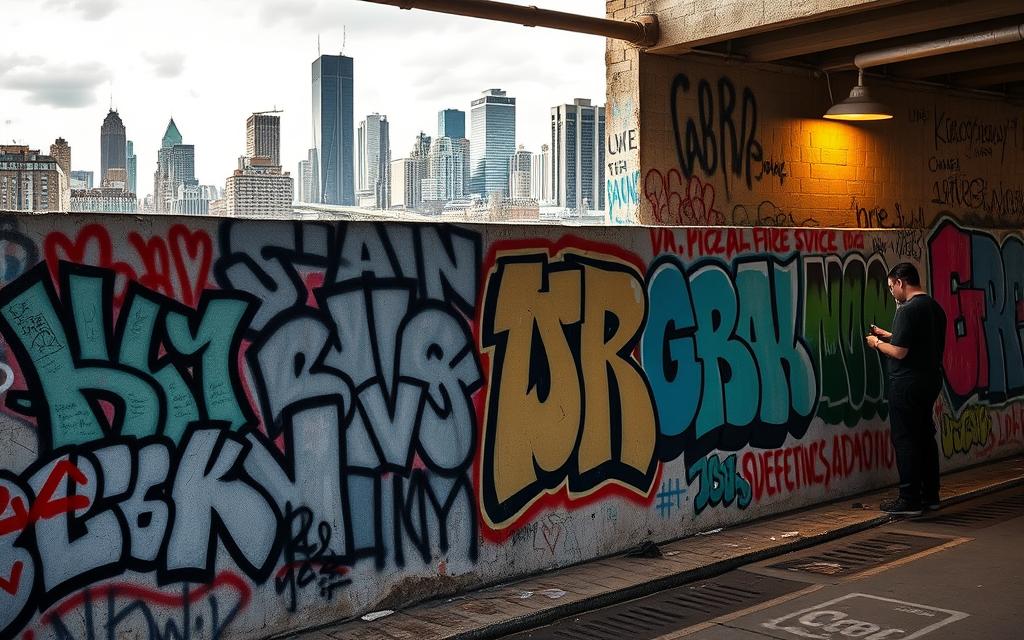
What happens when spray-painted creativity meets concrete regulations? From colorful murals celebrating communities to cryptic symbols marking gang territories, public spaces often become canvases for self-expression—or criminal defacement, depending on perspective. This tension sparks heated debates: when does tagging cross into vandalism, and who gets to decide?
New York’s subway system in the 1970s offers a prime example. TAKI 183’s iconic scribbles ignited a movement, transforming street art into global culture. Yet many cities still treat unauthorized works as property damage, with penalties ranging from fines to jail time. Recent data shows over 50% of U.S. municipalities classify unapproved murals as crime, regardless of artistic merit.
Political activists and property owners clash sharply. While some view graffiti art as revitalizing dull buildings, others see costly cleanup burdens. Philadelphia’s Mural Arts Program, however, proves collaboration works: 4,000+ legal artworks now boost tourism and community pride. Where’s the line between enhancing public spaces and defacing them? Let’s unpack the law.
Key Takeaways
- Unauthorized markings often violate property laws, even if artistically valuable.
- Historic movements like New York’s subway art shaped modern urban culture.
- Legal murals require explicit permission from property owners.
- Penalties vary by state, with some areas imposing multi-year sentences.
- Community programs successfully blend creativity with legal frameworks.
Understanding Graffiti: Art Versus Vandalism
Urban landscapes tell stories through color and shape. Splashes of paint on walls spark debates: creative art or destructive vandalism? The answer often depends on permission, intent, and public reception.
Defining Graffiti and Tagging
Tagging typically involves quick, repetitive signatures. It’s viewed as territorial marking rather than creative work. In contrast, elaborate murals with social messages often gain recognition as street art. Philadelphia’s Cornbread, widely considered the first modern tagger, used simple labels in the 1960s. Today’s artists employ wildstyle lettering and 3D effects.
Legal distinctions matter. Unauthorized markings on property usually violate local ordinances. However, commissioned pieces—like Chicago’s “Greetings from Chicago” mural—become tourist attractions. Quality and context shape how people perceive these works.
Historical Roots and Social Expression
New York’s 1970s subway movement redefined urban creativity. TAKI 183’s fame, covered by The New York Times, inspired bubble-letter styles and sprawling train designs. These acts mixed rebellion with identity claims in neglected neighborhoods.
Modern street art often addresses systemic issues. Banksy’s politically charged stencils or BLM murals demonstrate this shift. While some cities criminalize all unsanctioned work, others host festivals celebrating temporary installations. Public opinion remains divided—beauty truly lies in the beholder’s lens.
Historical Background and Cultural Impact
From subway tunnels to city skylines, creativity found its canvas during New York’s 1970s urban renaissance. This era birthed a movement where artists transformed transit systems into mobile galleries, blending rebellion with technical mastery.
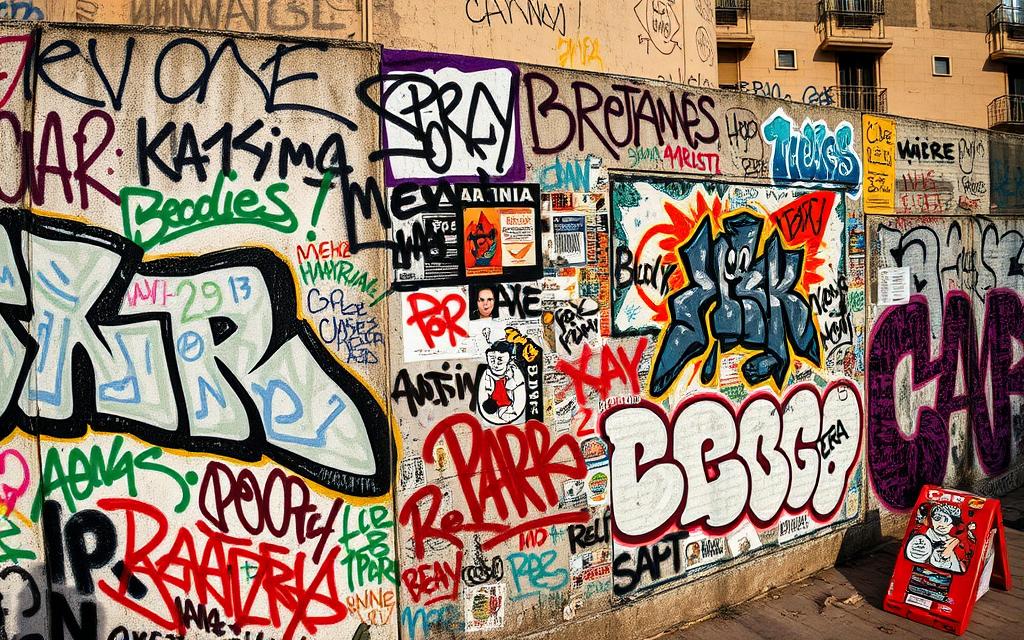
The Evolution of Graffiti in New York and Beyond
Early tags by figures like Julio 204 evolved into sprawling masterpieces on subway cars. Pioneers like Dondi White elevated the craft, developing wildstyle lettering that twisted letters into 3D labyrinths. By 1980, entire trains became rolling art exhibits—some taking weeks to complete under cover of night.
Media attention exploded when photographer Martha Cooper documented these works. Her book Subway Art (1984) globalized the city’s underground scene. Artists like Lady Pink gained recognition, proving spray cans could rival brushes in galleries.
Graffiti’s Connection to Hip Hop Culture
Parallel to rap’s rise, hip hop’s four elements—MCing, DJing, breaking, and aerosol art—formed a unified voice for marginalized communities. Fab 5 Freddy bridged both worlds, appearing in Blondie’s “Rapture” video while curating gallery shows.
Bubble letters and cartoonish pieces mirrored breakdancing’s energy. This synergy turned abandoned lots into vibrant spaces, challenging perceptions of urban decay. Today, these visual rhythms still pulse through community-led murals worldwide.
Legal Landscape: is graffiti illegal in the United States
Spray-painted walls spark legal battles across American cities. While some view murals as cultural assets, most jurisdictions treat unauthorized markings as criminal damage. Over 30 states classify such acts as misdemeanors or felonies, depending on repair costs.
Statutes and Municipal Codes
Oregon’s ORS 164.354 imposes fines up to $6,250 for defacing structures. Cities like Forest Grove ban spray paint sales to minors, while Beaverton mandates immediate removal by owners. New York’s Anti-Graffiti Task Force removed 12,000 markings in 2022 alone.
| Jurisdiction | Law Code | Penalty | Key Restriction |
|---|---|---|---|
| Oregon | ORS 164.354 | $6,250 fine | Felony if damage exceeds $1,000 |
| NYC | Admin Code §10-117 | 1 year jail | Bans markers in public places |
| Forest Grove, OR | Municipal Code 5.20 | $500 fine | Prohibits paint sales to under-18s |
| Beaverton, OR | Code 5.08.050 | $1,000/day | 72-hour cleanup rule |
Property Type Determines Outcomes
Public spaces face stricter rules—Chicago fines $750 per incident on transit buildings. Private lots allow murals with written permission, though 43% of disputes involve unclear ownership. Legal walls in Miami and Denver show how collaboration reduces vandalism claims.
Courts often weigh artistic intent against repair costs. A Philadelphia judge dismissed charges in 2021 after neighbors defended a mural’s community value. Such cases highlight the tension between creative expression and property rights.
Penalties, Enforcement, and Public Opinion
Urban centers face mounting pressure to address unauthorized markings. New York’s adoption of the broken window theory in the 1990s transformed enforcement—fixing minor issues like cracked windows and spray-painted tags reportedly reduced major crime by 37% within five years. This approach sparked global debates about urban aesthetics versus punitive measures.
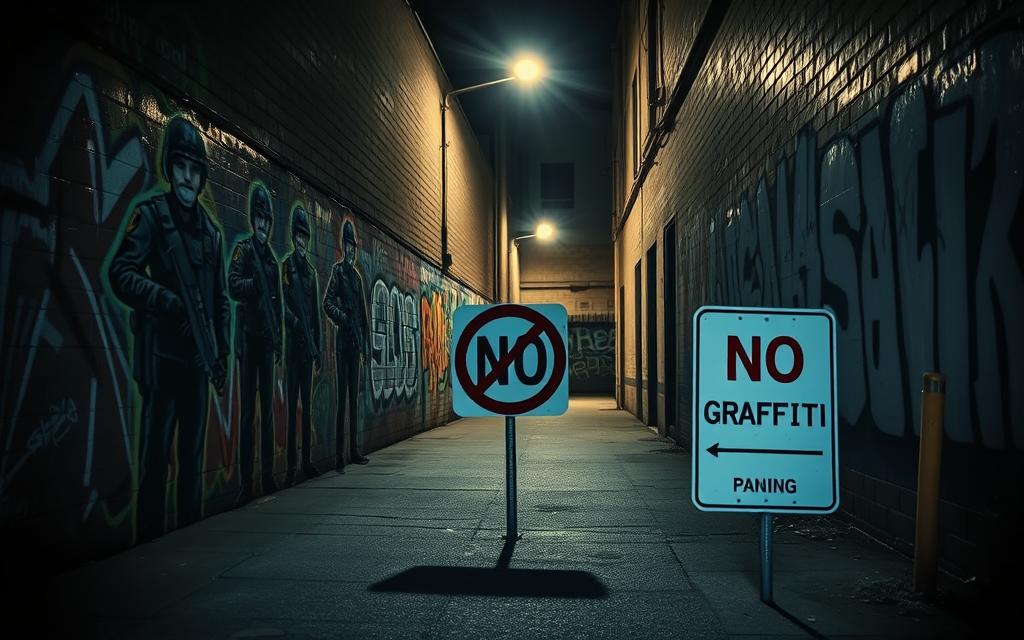
Consequences and Financial Implications
Major cities impose strict penalties for unauthorized work. Los Angeles charges offenders up to $1,000 per incident plus cleanup costs. In 2022, Chicago people spent $234 million removing markings from transit systems—funds diverted from park renovations.
| City | Fine Range | Community Service | Notable Case |
|---|---|---|---|
| Philadelphia | $300-$2,000 | 100 hours | 2021 muralist case dismissed |
| San Francisco | $500-$10,000 | 200 hours | BART station cleanup lawsuits |
| Miami | $1,000+ | Mandatory art classes | Wynwood Walls partnership |
Community Perceptions and Impact on Quality of Life
A London Assembly study found 58% of residents link visible markings to neighborhood decline. However, 41% support legal walls for creative expression. Property values near unauthorized works dropped 7% in Phoenix suburbs last year.
Media coverage shapes debates dramatically. Viral TikTok videos of vibrant murals often clash with news reports highlighting damage costs. While some artists argue their work revitalizes spaces, small business owners frequently cite repainting expenses exceeding $5,000 annually.
Public art initiatives offer middle ground. Denver’s RiNo district saw vandalism complaints drop 62% after designating 15 legal walls. These zones balance creative freedom with city ordinances, proving collaboration can transform urban narratives.
Graffiti, Property Rights, and Community Impact
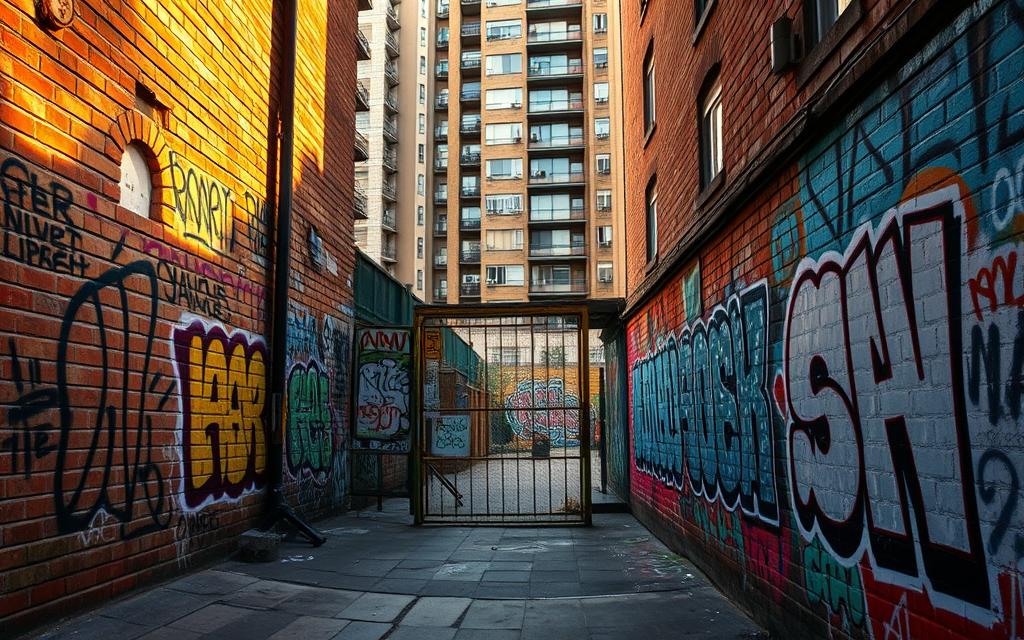
Colorful walls ignite fiery debates between economic concerns and cultural identity. A 2023 Urban Institute study found properties near unauthorized markings lost 12% of their value in Phoenix, while commissioned murals boosted retail traffic by 19% in Austin. These numbers reveal a complex battle over city aesthetics and financial stability.
Economic Ripples in Business Districts
Unapproved tags often repel customers. Seattle’s Pioneer Square saw 34% fewer foot traffic after repeated defacing of historic buildings. Conversely, Detroit’s Eastern Market transformed derelict warehouses into art-driven destinations, increasing weekend sales by $2.8 million annually.
| City | Policy | Economic Effect | Community Response |
|---|---|---|---|
| Austin, TX | 50+ legal walls | +$4.3M tourism revenue | 82% approval rate |
| Portland, OR | Strict removal laws | -7% retail growth | 65% support art zones |
| Detroit, MI | Artist grants | +14% property values | Local business partnerships |
Clashing Visions of Urban Identity
Brooklyn residents fiercely defended a controversial mural after the city labeled it vandalism. “Art shouldn’t require a permit to spark dialogue,” argued community organizer Lena Cho. Yet Denver’s RiNo district shows structured programs reduce conflicts—their 18 legal walls decreased cleanup costs by 41%.
Unauthorized works can create negative effects on local communities, but creative solutions exist. Minneapolis now offers mediation between property owners and artists, resolving 73% of disputes without lawsuits. This balance preserves artistic energy while respecting ownership rights.
Conclusion
Cities worldwide grapple with balancing creative expression and urban regulations. Rooted in hip-hop’s rise, spray-painted works transformed public spaces into cultural landmarks while sparking legal clashes. Historical movements proved art could challenge norms, yet unauthorized markings still risk fines or jail time across most U.S. jurisdictions.
Legal frameworks hinge on consent and property rights. Murals with owner approval boost tourism, like Denver’s RiNo district. Unauthorized pieces often trigger costly cleanup—Chicago spent $234 million removing transit markings in 2022. These financial strains fuel debates about damage versus community value.
Community-led initiatives offer solutions. Programs pairing artists with property owners reduced vandalism claims by 62% in some areas. Mediation efforts, like Minneapolis’ 73% dispute resolution rate, show collaboration’s potential.
The tension persists: vibrant self-expression versus ownership costs. Forward-thinking policies must honor both artistic voices and neighborhood needs. When creativity and regulation align, cities gain color without conflict.




Leave a Reply