

Ever wondered how people solve big problems without going to court for years? Mediation is a smart way to fix tough disagreements. It turns hard problems into solutions that everyone can agree on.
The mediation process helps people and groups solve conflicts in a special way. It’s different from going to court. Here, everyone works together with a neutral person to find solutions that work for all.
Mediation makes a safe space for people to talk about their issues. They can find out what’s really causing the problem. Then, they can come up with new ideas to solve it. This way, everyone can keep their relationship strong while fixing the big issues.
Key Takeaways
- Mediation is a collaborative conflict resolution approach
- Neutral mediators facilitate communication between parties
- The process is voluntary and confidential
- Participants have more control over the outcome
- Mediation can be faster and less expensive than court proceedings
What is Mediation?
Mediation is a strong way to solve conflicts. It helps people and groups find peaceful solutions. It turns hard talks into good ones.
Mediation uses a neutral person to help both sides find common ground. It’s different from going to court. It focuses on talking, understanding, and working together.
Definition of Mediation
Mediation is a way to talk things out with help from a neutral person. This person helps both sides see what they really want. They work together to find new solutions.
Key Objectives of Mediation
- Reduce emotional tensions between parties
- Promote open and respectful communication
- Uncover underlying interests and needs
- Generate collaborative problem-solving strategies
- Preserve relationships during conflict resolution
Common Uses for Mediation
Mediation works well in many situations. It offers flexible ways to solve problems:
- Family Disputes: Divorce settlements, child custody arrangements
- Workplace Conflicts: Employee disagreements, management challenges
- Commercial Negotiations: Business partnership disputes, contract negotiations
- Community Interactions: Neighborhood disagreements, organizational conflicts
By using mediation, we can turn fights into chances for understanding and teamwork.
The Role of the Mediator
Mediation needs a special person who helps solve conflicts. This person is called a Neutral Third Party. They do more than just talk. They help people understand each other better and keep the conversation positive.
Being a good mediator takes special skills. They must be careful and caring in their work.
Essential Skills of Effective Mediators
- Active listening capabilities
- Strong emotional intelligence
- Exceptional communication techniques
- Conflict resolution expertise
- Ability to remain impartial
Ethical Responsibilities in Mediation
Mediators have big duties to keep things fair. They promise to keep secrets and make sure everyone is heard. They want everyone to feel respected.
| Ethical Standard | Key Requirement |
|---|---|
| Confidentiality | Protect all shared information |
| Impartiality | Avoid personal bias |
| Transparency | Communicate process clearly |
| Voluntary Participation | Ensure consensual engagement |
Knowing what a mediator does helps people see conflicts in a new light. They can work together to find solutions.
The Mediation Process Overview
Understanding the mediation process is key for those seeking to solve problems together. It uses a structured way to fix conflicts through talking and understanding each other.
To succeed in mediation, planning and strategy are important. How does mediation work? It uses a clear, step-by-step plan to help both sides find solutions they can agree on.
Initial Contact and Scheduling
The first step is when the parties and a mediator first talk. Important steps include:
- Identifying the core conflict
- Determining mutual availability
- Selecting a neutral meeting location
- Establishing preliminary communication guidelines
Pre-Mediation Preparations
Good preparation is key for a successful mediation. People should:
- Gather important documents
- Think about their goals
- Practice talking openly and kindly
- Be ready to solve problems together
Mediation Session Structure
A mediation session has a set structure to help talk and find solutions. The mediator guides everyone, making sure the talk is fair and helpful.
The session starts with an introduction and opening statements. Then, there’s a joint discussion, private talks, and negotiation. Each part helps people understand each other and find a solution they can both agree on.
Benefits of Mediation
Alternative Dispute Resolution offers great ways to solve conflicts. Mediation is a special way to fix problems that is better than going to court.
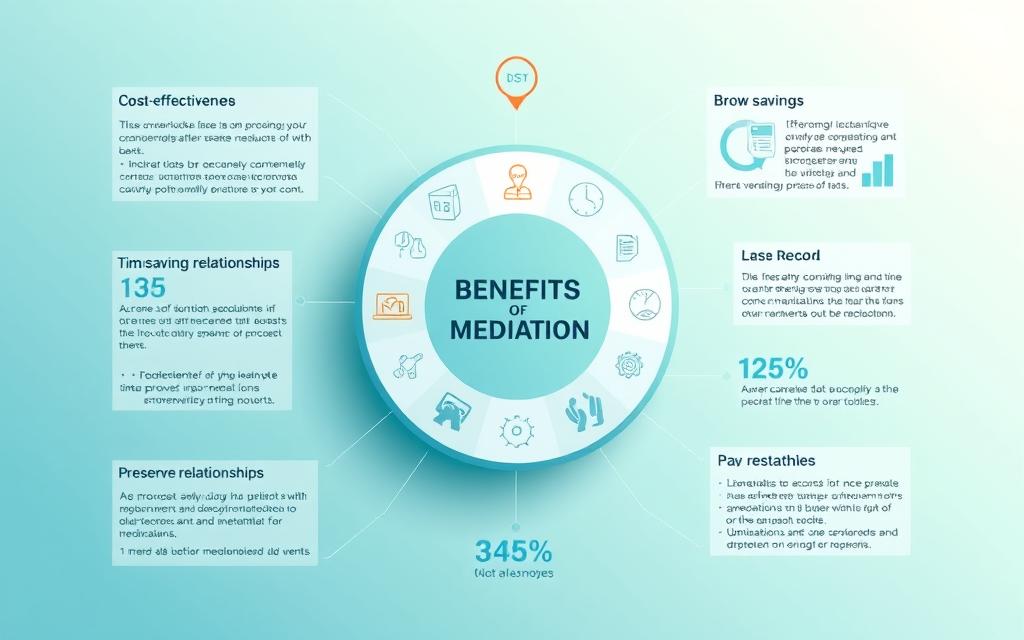
Choosing mediation changes how we deal with disputes. It’s a team effort that brings benefits that court fights can’t.
Cost-Effectiveness Compared to Litigation
Mediation saves a lot of money compared to court fights. You save money in many ways:
- Less money for lawyers
- Lower court costs
- Quicker solutions
- Less stress and worry
Time Efficiency
Mediation is much faster than court. You can solve problems in weeks, not years.
| Resolution Method | Average Time | Estimated Cost |
|---|---|---|
| Traditional Litigation | 12-24 months | $50,000-$100,000 |
| Mediation | 1-3 months | $3,000-$10,000 |
Emotional and Psychological Benefits
Mediation helps a lot with feelings and mind. It:
- Lessens stress
- Helps keep relationships strong
- Gives power to those involved
- Helps everyone understand each other better
Collaborative problem-solving leads to solutions where everyone wins. It keeps respect and dignity in the process.
Types of Mediation
Mediation is a strong way to solve problems in many areas. It fits different situations, helping to fix issues in a good way.
People and groups use mediation to tackle big problems. It works well in many places, showing its flexibility.
Family Mediation
Family mediation is kind when dealing with personal issues. Custody agreements and divorce plans often use this method.
- Addresses child custody issues
- Reduces emotional stress for families
- Helps maintain healthy co-parenting relationships
Workplace Mediation
Workplaces use mediation for problems between people. It keeps work places running smoothly.
- Resolves employee disputes
- Improves workplace communication
- Prevents legal problems
Community Mediation
Community mediation solves local problems. Trained mediators help groups find solutions.
Commercial Mediation
Commercial mediation solves business problems. It’s a clear way to fix contract issues and other business problems.
- Resolves business contract disagreements
- Saves time and legal expenses
- Preserves professional relationships
Preparing for Mediation
Getting ready for mediation is key. It helps in solving problems together. By preparing well, you can find a good solution for everyone.
Gathering Relevant Documents
Documents are very important in mediation. You should gather all important papers. This includes:
- Contracts or written agreements
- Email correspondence
- Financial records
- Photographic evidence
- Witness statements
Setting Clear Goals and Expectations
Having a clear plan is vital. You should:
- Know what you want most
- Focus on the most important issues
- Think about what you can give up
- Imagine different possible outcomes
Understanding the Other Party’s Perspective
Listening and understanding are key. Try to see things from the other side’s point of view. This makes solving problems together easier.
Good preparation makes you feel ready and smart. The aim is to find a fair solution, not to win.
The Mediation Session Explained
Mediation is about working together to solve problems. It’s a way to talk things out and find common ground. This process helps everyone understand each other better.
Opening Statements: Setting the Stage
Every mediation starts with opening statements. These are important moments. They let everyone share their side of the story.
- Individual narrative of the conflict
- Emotional context of the dispute
- Core interests and underlying concerns
Discussion and Negotiation Dynamics
The core of mediation is talking things through. Mediators help by guiding the conversation. They make sure everyone is heard.
- Identify shared interests
- Explore possible solutions
- Break down communication barriers
Creating Collaborative Solutions
Mediation turns conflicts into chances for growth. It uses creative problem-solving techniques. Everyone works together to find solutions that meet everyone’s needs.
After talking, there are a few possible results. They might agree, find a partial solution, or need more talks. If they agree, everyone signs the deal.
Common Challenges in Mediation

Mediation has its own set of challenges. It’s hard to find a way to solve conflicts. People often face big emotional and practical hurdles.
It’s key to know these challenges to solve problems together. Good mediators know how to handle these issues. They help keep talks going smoothly.
Emotional Barriers in Conflict Resolution
Feelings play a big role in mediation. People bring strong emotions like anger, resentment, fear, and anxiety. These feelings can make it hard to talk things out.
Mediators use special ways to help. They listen well and show empathy. This makes it safer for everyone to share their thoughts.
Navigating Power Imbalances
Power can affect how talks go. Some people might feel less powerful or scared. This can make it hard to have fair talks.
Mediators try to make things fair. They make sure everyone gets a chance to speak. They also help make sure decisions are fair for all.
Overcoming Resistance to Compromise
It’s hard for people to give in sometimes. They might hold on too tight to their side. Good mediators find ways to help them see things differently.
They help people find common ground. They also find new ways to solve problems. This way, even tough conflicts can be solved.
Post-Mediation Outcomes
When mediation ends well, important steps follow. These steps turn talks into real actions. A Settlement Agreement shows the end of hard work in solving disputes.
After mediation ends well, some important steps happen. These steps make sure everyone agrees and knows what to do next:
- Write down all solved problems
- Get signatures from everyone involved
- Check if the agreement is legal
- Set clear times for when things need to happen
Finalizing Agreements
The Mediation Process needs careful writing to make a legal agreement. Everyone must check every part. This makes sure the agreement is right and fair for all.
Implementing and Enforcing Agreements
It’s not just about agreeing. Making it work is key. Here’s how to do it well:
- Make a list of things to do
- Know who does what
- Have ways to make sure things get done
- Plan to check in later
Lawyers say it’s good to keep talking to solve any problems fast and together.
When to Choose Mediation
Alternative Dispute Resolution (ADR) has many flexible solutions. It helps solve conflicts outside of court. Knowing when to pick mediation can save time and reduce stress. It also helps keep relationships strong in tough times.
Mediation is a great choice in many situations:
- Disputes involving ongoing personal or professional relationships
- Situations requiring confidential discussions
- Complex conflicts needing creative problem-solving
- Conflicts where maintaining communication is key
Ideal Circumstances for Mediation
Mediation works best when both sides want to solve problems together. They want to avoid the cost and time of court. Mediation offers a neutral space for open talks. Both sides can find solutions that work for everyone.
Exploring Alternative Resolution Methods
But, mediation isn’t right for every case. Other ways to solve disputes include:
- Arbitration (more formal than mediation)
- Litigation (court-based resolution)
- Negotiation (direct communication between parties)
- Collaborative law (each party has legal representation)
Choosing the best way to solve a conflict depends on the situation. It also depends on the relationship and what each side wants.
Mediation Confidentiality
Confidential mediation is key in Alternative Dispute Resolution. It’s different from public court cases. Here, people can talk freely without worrying about being judged later.
The mediation process is strong because it keeps secrets safe. People can share their worries. They know their talks will stay private.
Protecting Open Communication
Confidentiality in mediation is very important:
- It helps people talk openly and honestly.
- It makes a safe place for talks.
- It avoids legal problems later.
- It helps build trust among people.
Legal Framework of Confidential Mediation
There are strong laws to protect mediation confidentiality. These laws keep talks private.
| Legal Protection | Key Characteristics |
|---|---|
| Statutory Confidentiality | Prevents sharing of mediation talks |
| Evidentiary Restrictions | Limits using mediation talks in court |
| Professional Ethics | Mediators must keep secrets |
By focusing on keeping things private, mediation offers a special way to solve problems. It helps people find solutions that work for everyone.
Mediation vs. Litigation

There are many ways to solve conflicts. Mediation and litigation are two legal methods. They are different in how they work, cost, and what happens next. Knowing these differences helps people and groups choose the best way to solve problems.
Key Differences Between Mediation and Litigation
Mediation and litigation are different in many ways:
- Mediation lets parties make their own solutions. Litigation has a judge make the decision.
- Mediation costs less than going to court.
- Mediation is quicker than court cases.
- Mediation is less stressful than court fights.
Scenarios Favoring Litigation
Some cases need litigation more than mediation:
- When a new law needs to be set
- For complex cases needing a judge’s ruling
- In cases where there’s a big power gap
- When one side won’t talk fairly
| Criteria | Mediation | Litigation |
|---|---|---|
| Cost | Lower expenses | Higher legal fees |
| Time | Faster resolution | Prolonged process |
| Control | Parties control outcome | Judge determines result |
Mediation works well in certain situations. It’s important to think about each case carefully. This helps decide the best way to solve problems.
Success Rates of Mediation
Mediation is very good at solving disputes. It works well in many kinds of legal and personal problems. This method is great for finding solutions that everyone can agree on.
Studies show mediation is very effective. About 70-80% of the time, mediation leads to a good agreement. This is much better than going to court.
Factors Driving Mediation Success
There are a few key things that make mediation work:
- When both sides are willing to work together
- A skilled mediator to help
- Good communication
- Respect between the people involved
Statistical Breakdown of Successful Outcomes
Mediation is very successful in many areas:
- Family Disputes: 75% of cases are solved
- Workplace Conflicts: 70% of cases have a good agreement
- Commercial Disagreements: 80% of cases are settled
People are usually happier with mediation than with going to court. Mediation lets everyone create a solution that works for them. This is something courts can’t do.
Resources for Improving Mediation Skills
Getting better at Negotiation Facilitation takes a lot of work. People wanting to be great at Conflict Resolution have many resources. These help them get better at Mediation Process.
There are many ways to learn about mediation. If you want to be a mediator, you can choose from:
- University-sponsored training programs
- Online certification courses
- Professional workshops
- Specialized conferences
Professional Training Programs
Training programs teach you how to be a good mediator. The Program on Negotiation at Harvard Law is a great place to learn advanced skills.
Recommended Learning Resources
Here are some important resources for learning:
- Influential Books on Mediation
- “Getting to Yes” by Roger Fisher
- “The Mediation Process” by Christopher Moore
- Professional Journal Subscriptions
- Conflict Resolution Quarterly
- Negotiation Journal
Certification and Continuing Education
Many places need you to get certified to be a mediator. You need to know what your area requires. This usually includes:
- Specific training hours
- Ethical standards compliance
- Professional examination
- Ongoing education credits
Conclusion: The Future of Mediation
Alternative Dispute Resolution is changing how we solve problems. Mediation is a key part of this change. It helps us find solutions in a way that’s more flexible and understanding than old legal methods.
Technology is making mediation better. Online platforms are making it easier to solve disputes from anywhere. This means more people can use mediation to talk things out.
Emerging Trends in Dispute Management
More people are seeing the value of mediation. It’s used in many areas, like business and family law. Mediation helps avoid expensive legal fights and keeps relationships strong.
Global Impact of Mediation Practices
Mediation’s future looks bright. It’s becoming a go-to way to solve big problems. By focusing on understanding and working together, mediation offers a new way to fix conflicts.



Leave a Reply